In the modern manufacturing and packaging world, speed, accuracy and compliance are critical. Each item leaving the production line or packaging line must be clearly marked with accurate information – such as date of manufacture, use-by date, batch code, MRP, and lot code. Doing this accurately, quickly and without human intervention is what an automatic batch coding machine is designed to do.
An automatic batch coding machine is an industrial printing system that is integrated into the packaging line to automatically print variable data on products, labels, cartons, pouches, bottles and flexible packaging, without human intervention. With increasing packaging line speeds and an ever-growing demand for compliance, the automatic batch coding machine has become one of the most crucial pieces of equipment for manufacturers.
Here, we’ll look at the advantages of using an automatic batch coding machine in packaging, the industries that rely on it the most, and how it’s changing the game for manufacturers when it comes to product identification and traceability.
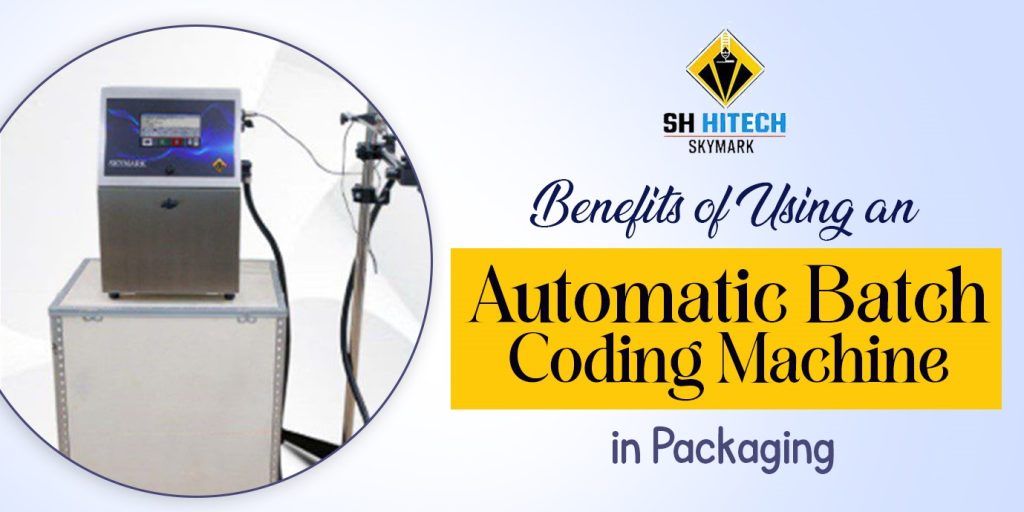
What Is an Automatic Batch Coding Machine?
An automatic batch coding machine is a fast-moving coding and marking system that applies variable batch information to products or packages during the manufacturing process. An automatic batch coding machine is a high-speed, continuous system that prints without manual intervention at the speed of the conveyor or packaging system – producing an accurate print on each unit as it moves past the printhead.
Today’s automatic batch coding machines come in several technologies – Continuous Inkjet (CIJ), Thermal Inkjet (TIJ), Laser, and Thermal Transfer Overprinting (TTO) – each with a different level of substrate, throughput and print quality capabilities. But they all eliminate the need for manual coding, minimise mistakes and ensure consistent quality at high speed – typically thousands of units each hour.
Main Advantages of an Automatic Batch Coding Machine for Packaging
1. High-Speed, Uninterrupted Production
Perhaps the biggest benefit of using an automatic batch coding machine is the fact it can keep up with the rest of the packaging line at high speeds. No matter if your packaging line is operating at 100 packages per minute or more than 1,000, automatic batch coders are designed to keep up with your production line, printing on every unit without halting the line and feeding packages manually. The result is increased productivity, shorter cycle times and greater output.
2. No Error Prone Manual Coding
Human batch coding (using hand stamps, manual inkjet printers, or offline batch coders) is subject to human error. Common issues include incorrect dates, blurry prints, missing units and crooked codes, resulting in recalls, regulatory fines and reputational damage. With an automatic batch coding machine, there’s no human factor. With batch variables entered into the system, all units will have the same, accurate, and legible code – automatically, for the entire production batch.
3. Compliance Made Easy
Government agencies like the FSSAI, FDA, BIS, and state governments require that variable information on packaged products is legibly printed. Failure to comply may lead to product recall, fines or factory shutdowns. An automatic batch coding machine automatically ensures that each product is compliant, with consistent, legible, and tamper-proof data. This is essential for the food and beverage, pharmaceutical and agrochemical industries with very high compliance standards.
4. Better Quality Printing
The quality of the printing impacts consumer trust and scannability of barcodes. An automatic batch coding machine provides high-resolution, clear and legible codes on each product, whether it is a simple best-before-date or a complex 2D barcode or QR code. Modern coding technologies like Thermal Inkjet and laser enable high-quality printing that is consistent, smudge-proof and scannable for the product’s entire lifetime.
5. Full Product Traceability
Traceability is a critical part of the supply chain. If a quality problem arises or a recall is needed, manufacturers need to know exactly which batch is the problem, when it was manufactured and where it has been shipped. With an automated batch coding machine, each unit is marked with a unique, machine-readable code that identifies the batch – allowing for swift and accurate recalls involving only the affected batch and safeguarding consumers and reputation alike.
6. Seamless Line Integration
New automatic batch coding machines can be easily integrated with current conveyors, packaging equipment, and enterprise resource planning (ERP) or manufacturing execution systems (MES). Therefore, batch information (such as lot numbers, dates and shift codes) can be automatically updated from a central system, eliminating the need for manual entry at the machine and ensuring that the correct batch codes are used for the correct products.
7.Lower Costs Compared to Manual and Semi-Automatic Operations
The upfront cost of an automatic batch coding machine is greater than for manual coding, but the cost savings over time are significant. Lower labour costs, ink savings from precise ink metering, avoidance of rework costs due to coding inaccuracies, and risk mitigation against costly recalls, all add up to a strong economic value proposition. For large-scale producers, the return on investment for an automatic batch coding machine can be achieved in months, not years.
8. Compatible with a Variety of Packaging
An automatic batch coding machine can code a variety of packaging formats. Today’s coding technologies can print on a range of packaging types such as glass bottles, PET bottles, aluminium cans, flexible pouches, shrink-wrapped trays, corrugated cartons, and laminated labels – a single automatic batch coding machine can be used to code multiple packaging lines in a production facility.
Automatic Batch Coding Machines for a Variety of Industries
The automatic batch coding machine is a critical part of today’s packaging lines in many industries:- Food & Beverage: High-speed application of date codes, batch numbers, and ingredient batches on bottles, pouches, cartons and cans.
- Pharmaceuticals: Batch numbers, expiry date and serialisation on strip packs, blister packs, vials and carton outers – with the highest levels of print quality and regulatory compliance.
- Cosmetics & Personal Care: MRP, date of manufacturing, and batch numbers on tubes, bottles and sachets in a competitive, brand conscious environment.
- Agrochemicals: Compliance marking on bottles, pouches and drums for fertilisers, pesticides and other crop protection products.
- FMCG & Consumer Goods: Price, promotional, and date coding on fast-moving consumer goods (FMCG).
- Automotive & Industrial: Item identification, date of production, and serial number labelling on packaged parts and assemblies.
Selecting the Correct Automatic Batch Coding Machine
When choosing an automatic batch coding machine, you need to consider:- Package Type & Material: Choose the appropriate coding technology for your packaging material – inkjet for absorbent substrates, laser for glass and PET bottles, TTO for flexible films.
- Production Speed: Make sure the rated speed of the machine is equal or higher than the speed of your packaging line.
- Content & Resolution: For barcodes or QR codes, select a higher resolution technology like TIJ or TTO.
- Integration: Ensure it can integrate with your ERP, MES or SCADA system for data transfer.
- Service & Support: Choose a manufacturer that offers installation, training and ongoing support.
Conclusion
The automatic batch coding machine is no longer a luxury for large-scale manufacturers alone — it is a fundamental requirement for any packaging operation that prioritises accuracy, compliance, traceability, and production efficiency. As regulatory requirements tighten and consumer expectations for product information rise, investing in a high-quality automatic batch coding machine is one of the most impactful decisions a manufacturer can make.
From eliminating human error and meeting compliance standards to integrating seamlessly with production systems and delivering consistent, high-resolution print quality at speed, the benefits of the automatic batch coding machine extend far beyond the coding station itself — they flow through every stage of your supply chain and right into the hands of your customers.
Choose a proven, reliable automatic batch coding machine from a manufacturer with deep industry expertise, a comprehensive product range, and the technical support capability to keep your production lines running at peak performance — day after day.
Talk to Our Coding Machine Experts TodayEmail: contact@shhitech.in
Phone: +91-9011116630 | +91-9112711560
Website: https://shhitech.in/