
In modern manufacturing and packaging environments, accurate product identification is essential. Products moving through production lines must include important information such as batch numbers, manufacturing dates, expiry dates, serial numbers, and barcodes. These markings help manufacturers maintain traceability, ensure compliance with regulations, and improve supply chain management.
Continuous inkjet technology has become one of the most reliable solutions for product coding in high-speed production environments. However, the effectiveness of the printing process depends not only on the printer itself but also on the type of ink used. Selecting the correct CIJ Printing Ink is critical to ensure clear, durable, and high-quality markings on different materials.
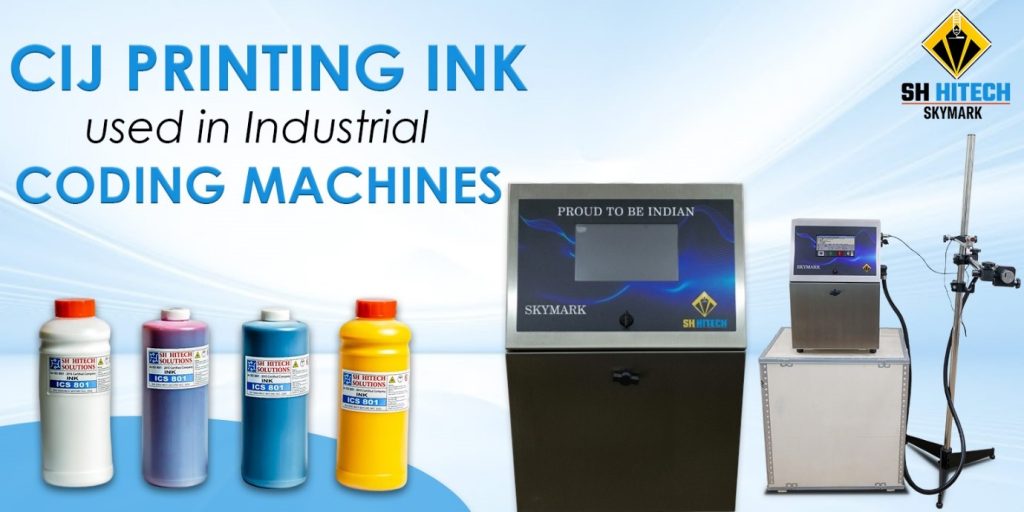
Understanding CIJ Printing Technology
Continuous inkjet printing is widely used in industrial production lines because it allows fast and precise coding on products and packaging. In this process, the printer generates a continuous stream of microscopic ink droplets. These droplets are directed onto product surfaces to create characters, numbers, barcodes, or logos.
The quality of these printed markings depends heavily on the properties of the CIJ Printing Ink used in the system. Industrial environments often involve challenging conditions such as high production speeds, moisture, dust, and varying temperatures. Therefore, the ink must be designed to perform reliably in these demanding conditions. Different industries and packaging materials require different ink formulations, which is why manufacturers offer multiple types of specialized inks.
Why Choosing the Right Ink Is Important
The choice of ink directly affects the durability, readability, and performance of the printed code. Selecting the wrong type of ink can lead to smudging, fading, or poor adhesion on the product surface.
The right CIJ Printing Ink ensures:
- Clear and legible codes
- Strong adhesion to packaging materials
- Resistance to environmental conditions
- Fast drying during high-speed production
- Long-lasting product identification
Because of these requirements, manufacturers must carefully evaluate the ink type based on their production environment and packaging materials.
Common Types of CIJ Printing Ink Used in Industrial Coding Machines
Industrial coding applications require different ink formulations depending on the material being printed and the operating environment. Below are some of the most commonly used types.
Dye-Based Inks: Dye-based inks are one of the most popular used inkjet printing in continuous printing. Such inks include colour dyes, which are dissolved in fluid solvents. They can fit in most general-purpose uses, and give good and sharp print quality on paperboard, plastic films and labels. The positive aspect of a dye-based formulation is that they allow the creation of very visible marks and yet they can dry quickly and in fact can be used on a fast production line.
Pigmented Inks: Pigmented inks are those inks that have small solid particles suspended in the liquid ink. These particles form more colour contrast and clearer visibility, particularly on dark or coloured surfaces. This kind of CIJ Printing Ink is usually used by industries that employ dark packaging materials in their operations since it makes it highly visible and easy to read. The pigmented formulations are generally applied in drink packaging, electronics production, and car parts.
Fast-Drying Inks: Production lines run very fast, so the ink must dry virtually the moment it is printed. This is specifically achieved by using fast-drying formulations. These inks minimize chances of smudging or smearing in cases where the products are conveyed at a rapid speed on conveyor belts. Printing Ink that dries fast is especially applicable in industries that pack items quickly such as food and beverage production.
Solvent-Based Inks: Solvent-based inks are meant to be bonded firmly on non-porous surfaces of plastic, glass and metal. These inks are very stable and they do not change with changes in the environment like moisture, changes in temperature etc. They are highly adhesive and, consequently, are very popular in industries where the product markings need to be labelled and not lost during the transportation and storage processes.
UV-Resistant Inks: there are products that are stored or which are subjected to sunlight or ultraviolet radiations during storage or throughout their distribution. The ink must be UV-resistant and can be used to ensure that it remains visible under extended sunlight. This kind of Printing Ink is commonly utilized by manufacturers in outdoor items, construction and some industrial packaging.
Food-Grade Inks: Food and beverage printing Food and beverage laws mandate indirect food contact inks in food and beverage printing. Food-grade inks are specifically designed in such a way that they meet regulatory requirements in order to be sure that printed codes do not affect food packaging material. The inks are typically applied on the packaging and food containers to print batch numbers and expiry dates.
Ink Resistant to High Temperature: There are industrial applications in which the inks have to withstand very high temperatures, e.g. in metalwork or in moulding plastics. Specialized CIJ Printing Ink is needed in such environments to be subjected to high temperatures without fading or degradation. These inks guarantee that the codes of the products are readable even after the products have been subjected to high temperatures in manufacturing processes.
Applications Across Different Industries
Different industries require different types of inks depending on their production processes and packaging materials.
Food and Beverage Industry: Food packaging requires clear printing of manufacturing dates, expiry dates, and batch numbers. Fast-drying and food-grade inks are commonly used in this sector.
Pharmaceutical Industry: Medicine packaging must include precise batch identification and expiry details for regulatory compliance and patient safety.
Cosmetics and Personal Care Products: Cosmetic manufacturers rely on durable inks that remain visible on plastic bottles, glass containers, and packaging cartons.
Electronics Industry: Electronic components often require serial numbers and identification codes printed on small surfaces with high precision.
Logistics and Packaging: Shipping cartons and packages require barcodes and tracking information to support efficient supply chain operations. Because of these diverse applications, selecting the right CIJ Printing Ink is essential for maintaining clear and reliable product markings.
Role of SH Hitech Coding Private Limited in Industrial Printing Solutions
When businesses require reliable coding solutions, they often rely on experienced technology providers. SH Hitech Coding Private Limited has established itself as a trusted provider of advanced industrial coding systems and ink solutions. The company offers a wide range of coding machines and compatible inks designed for different industrial environments.
Their expertise helps manufacturers select the most suitable ink formulations for their packaging materials and production conditions. By focusing on innovation, quality, and technical support, SH Hitech Coding Private Limited assists businesses in implementing efficient product coding solutions that improve operational efficiency and product traceability.
Factors to Consider When Selecting CIJ Printing Ink
Choosing the right ink involves evaluating several important factors.
Manufacturers should consider the type of packaging material, whether it is porous or non-porous. Production speed is also important because high-speed lines require faster drying inks. Environmental conditions such as temperature, humidity, and exposure to sunlight should also be considered. Additionally, regulatory requirements must be followed in industries such as food and pharmaceuticals. Selecting the correct CIJ Printing Ink ensures reliable product identification while maintaining consistent print quality across production lines.
The Future of Industrial Coding Inks
Industrial printing technology continues to evolve with the growth of automation and smart manufacturing systems. Ink manufacturers are developing advanced formulations that offer better durability, faster drying times, and improved environmental sustainability. Future innovations may include eco-friendly inks with reduced solvent emissions, improved pigment technology for higher contrast printing, and specialized inks designed for advanced packaging materials. These developments will further enhance the performance of industrial coding systems and support efficient production operations worldwide.
Conclusion
Selecting the right CIJ Printing Ink is crucial for achieving high-quality printing results in industrial environments. Different ink formulations are available to meet specific production needs, including fast-drying, pigmented, solvent-based, UV-resistant, and food-grade options.
With the support of experienced providers like SH Hitech Coding Private Limited, manufacturers can implement advanced coding solutions that deliver reliable and consistent product identification across various industries.
👉 Request Product Details & Pricing Now
📩 Email: contact@shhitech.in
📞 Phone: +91-9011116630 | +91-9112711560
🌐 Website: https://shhitech.in/