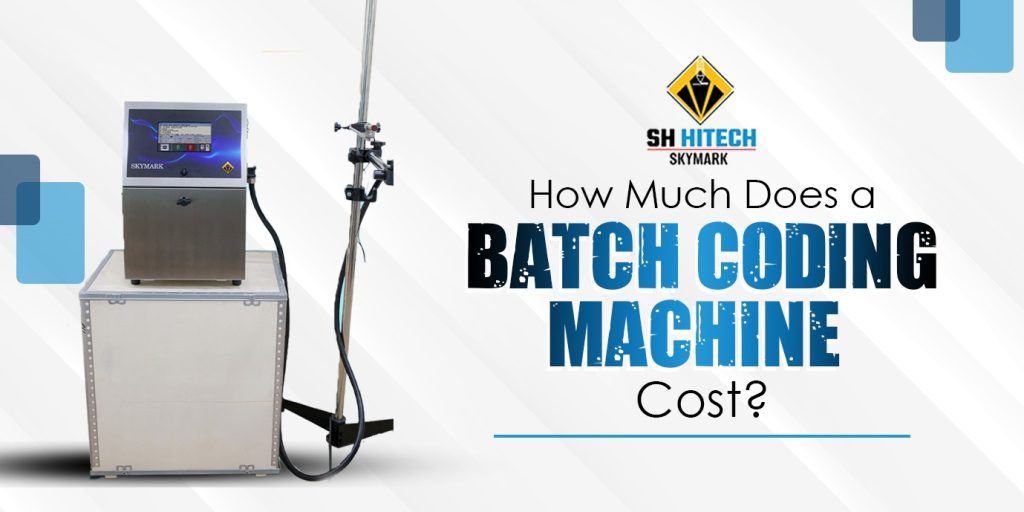
If you are a manufacturer, packager, or business owner looking to streamline your production line, one of the most common questions you will ask is — how much does a batch coding machine cost? The answer is not as straightforward as a single number, because pricing depends on a variety of factors including technology type, brand, features, production speed, and after-sales support.
In this comprehensive guide, we break down everything you need to know about batch coding machine pricing — from entry-level models to advanced industrial systems — so you can make a smart, informed investment for your business.
What Is a Batch Coding Machine?
A batch coding machine is an industrial printing device used to mark important product information directly onto packaging, labels, bottles, pouches, cartons, pipes, or any other surface. This information typically includes:
- Manufacturing date and expiry date
- Batch number and lot number
- MRP (Maximum Retail Price)
- Barcodes, QR codes, and serial numbers
- Brand logo and regulatory compliance codes
Also known as a date coding machine, product coding machine, or marking and coding system, this equipment is essential for regulatory compliance across industries such as food and beverage, pharmaceutical, cosmetics, automotive, and packaging.
Types of Batch Coding Machines and Their Price Ranges
The cost of a batch coding machine varies widely depending on the technology used. Here is a clear breakdown of the most common types available in the Indian market:
Machine Type | Price Range (INR) | Best Suited For |
Inkjet Batch Coding Machine (CIJ) | ₹80,000 – ₹5,00,000+ | Food, Pharma, Beverages, FMCG |
Thermal Inkjet (TIJ) Printer | ₹25,000 – ₹1,50,000 | Small businesses, Low volume |
Laser Coding Machine | ₹2,00,000 – ₹12,00,000+ | Premium packaging, Pharma, Auto |
Thermal Transfer Overprinter (TTO) | ₹1,50,000 – ₹6,00,000 | Flexible packaging, Pouches |
Hot Stamping / Foil Coding | ₹15,000 – ₹80,000 | FMCG labels, Basic date coding |
Offline Batch Coding Machine | ₹10,000 – ₹50,000 | Small scale, Manual operation |
Key Factors That Affect Batch Coding Machine Price
Understanding what drives the cost of a batch coding machine helps you avoid overpaying or buying a system that’s not powerful enough. Here are the important pricing factors to consider:
1. Printing Technology
The technology used in the machine is the factor that affects its cost. Continuous Inkjet (CIJ) machines are moderately. Can handle many tasks. Laser coding machines make high-quality marks but are more expensive. Thermal inkjet systems are a cost- option for lighter applications. Each technology has costs for ink, solvent and maintenance.
2. Production Speed and Line Integration
A machine that can work at 600 metres per minute on an automated production line costs more than one that works at 60 metres per minute on a semi-automatic line. If your coding and marking system needs to work with conveyors, sensors and PLCs you will have to pay extra for integration, which can range from ₹10,000 to ₹50,000.
3. Brand and Country of Manufacture
Brands like Videojet, Markem-Imaje, Domino and Linx are reliable but expensive. They can cost 30% to 60% more than Indian-made systems. Indian brands and authorised resellers offer performance and local support at lower prices making them suitable for small and medium-sized manufacturers.
4. Substrate and Surface Compatibility
What surface do you need to code on? Coding on glass, metal or rough surfaces requires ink and more powerful systems. A batch coding machine for bottles will cost different from one for corrugated cartons, HDPE pipes or pharmaceutical blisters. If a machine can code on surfaces it usually costs 15% to 25% more.
5. After-Sales Service and Warranty
This is a overlooked cost factor. A cheaper machine with service can cost more in the long run due, to downtime and repairs. When comparing prices consider the Annual Maintenance Contract (AMC) cost, spare parts availability, engineer response time and training support.
Batch Coding Machine Cost: Industry-Wise Breakdown
Different industries have different coding requirements, and therefore different budget expectations. Here is a practical guide based on real-world application needs:
Food & Beverage Industry
For food manufacturers printing expiry dates, MRP, and FSSAI codes on bottles, pouches, and cartons, a CIJ batch coding machine priced between ₹1,00,000 and ₹3,00,000 is typically the most suitable and cost-effective option. Food-grade ink compatibility is mandatory and adds a small but important premium to operational costs.
Pharmaceutical Industry
Pharma manufacturers must comply with stringent Schedule M and GMP regulations. High-resolution inkjet or laser coding systems are preferred. Budget between ₹2,00,000 and ₹8,00,000 depending on blister pack, vial, or carton coding requirements. The print and apply labelling accuracy at this level must be near-perfect, as errors can lead to regulatory penalties.
FMCG & Packaging Industry
Fast-moving consumer goods companies operating high-speed lines often require Thermal Transfer Overprinters or high-speed CIJ systems. These industrial coding machines range from ₹1,50,000 to ₹6,00,000 and must handle continuous multi-shift operation without significant downtime.
Hidden Costs to Watch Out For
Many buyers focus only on the upfront machine cost and are surprised by ongoing expenses. When budgeting for a batch coding machine, always account for these additional costs:
- Ink and Solvent Refills: Monthly ink cost ranges from ₹2,000 to ₹15,000 depending on machine type and volume.
- Spare Parts: Nozzles, filters, and print heads require periodic replacement — budget ₹5,000 to ₹30,000 annually.
- AMC (Annual Maintenance Contract): Typically 8% to 12% of machine cost per year. Highly recommended for uninterrupted production.
- Installation and Training: Reputable suppliers include this in the package, but always confirm before purchasing.
- Line Integration Cost: Connecting the coding machine with conveyors, sensors, and PLCs may require additional engineering work.
How to Choose the Right Batch Coding Machine for Your Budget
Selecting the right batch coding machine is not just about finding the lowest price — it is about finding the best value for your specific production needs. Follow these steps:
- Define your production volume: How many units per hour or per shift? This determines the minimum speed requirement.
- Identify your substrate: What material or surface will you print on — plastic, glass, metal, carton, or flexible pouch?
- List what you need to print: Date, batch number, MRP only — or barcodes, QR codes, and logo too?
- Check regulatory requirements: Food, pharma, and export products have specific compliance codes that may require higher resolution printing.
- Evaluate after-sales support: Choose a supplier with a local service engineer, genuine spare parts, and a track record of prompt support.
Conclusion
The cost of a batch coding machine in India ranges from as low as ₹10,000 for basic manual systems to over ₹12,00,000 for advanced laser coding solutions. The right investment depends on your production volume, industry requirements, substrate type, and long-term operational goals. Always consider the total cost of ownership — not just the purchase price — and partner with a supplier who offers genuine products, proven service support, and expert installation.
SH Hitech Solution is a trusted name in industrial coding and marking systems, serving manufacturers across Food & Beverage, Pharmaceuticals, FMCG, Packaging, Automotive, and Chemical industries. As an authorised supplier and service partner for Skymark Inkjet Printers, SH Hitech brings years of hands-on expertise, rapid after-sales support, genuine spare parts, and on-site installation to businesses across Mumbai, Pune, Nashik, Aurangabad, and Pan India. Whether you are a small business investing in your first batch coding machine or a large manufacturer upgrading your entire production line, SH Hitech Solution delivers the right technology at the right price — with service support that keeps your operations running without interruption.
📞 Contact SH Hitech Solution today for a FREE demo and personalised price quote!