If you run a manufacturing or packaging business, you already know how important it is to mark every product clearly and consistently. An industrial inkjet printer makes this possible by printing batch codes, expiry dates, barcodes, and logos directly onto products and packaging at high speed. But before investing in this technology, most buyers ask the same question: how much does it actually cost? The honest answer is that price depends on several factors, including the printer type, brand, features, and the size of your production line. In this guide, we will break down everything that affects the cost of this equipment, so you can plan your budget accurately and choose a coding and marking solution that truly fits your business.
What Is an Industrial Inkjet Printer?
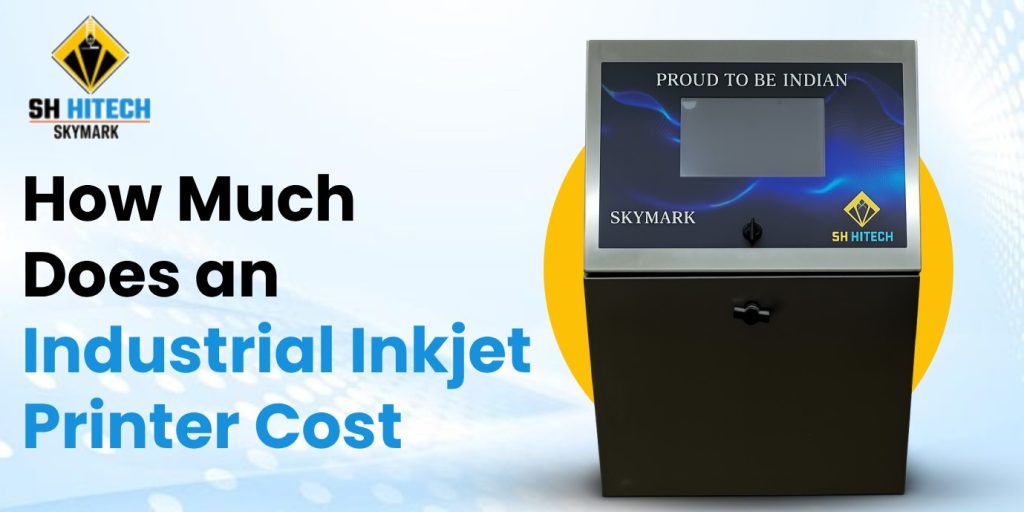
This equipment is a machine used in manufacturing and packaging processes to print variable data, such as batch numbers, manufacturing dates, expiry dates, barcodes, and logos, directly onto products or packaging materials. Unlike ordinary office printers, this equipment is built to work continuously on fast-moving production lines, printing on materials like plastic, metal, glass, cardboard, pipes, and cables. There are different types of industrial coding printers, including continuous inkjet (CIJ) printers, thermal inkjet (TIJ) printers, and handheld inkjet printers, each suited to a different kind of marking application. Because these machines play such a critical role in traceability and compliance, understanding their cost is an important step before you buy.
Key Factors That Affect the Cost of an Industrial Inkjet Printer
The price of this kind of equipment is rarely a fixed number. Several factors work together to determine the final cost, and understanding them will help you compare options more confidently.
1. Type of Printing Technology
The technology inside the machine has the biggest impact on price. A Continuous Inkjet (CIJ) printer typically has a higher upfront cost but is extremely versatile, working on almost any surface and in demanding factory conditions. A Thermal Inkjet (TIJ) printer is usually more affordable to purchase but may have higher running costs for cartridges. Handheld coding printers are the most budget-friendly option and work well for smaller operations or occasional marking needs.
2. Print Speed and Production Line Requirements
If your production line runs at high speed, you will need a more powerful printer that can keep up without slowing down operations. Machines designed for high-speed coding and marking usually cost more than basic models meant for slower or manual production lines.
3. Print Resolution and Message Complexity
Simple codes like batch numbers and dates require less advanced hardware, keeping costs lower. However, if you need to print detailed logos, barcodes, or multi-line text with high clarity, you may need a higher-resolution machine, which naturally costs more.
4. Brand and Build Quality
Established brands known for reliable coding and marking solutions, such as Hitachi, Domino, Videojet, and Linx, often come at a premium price. This additional cost usually reflects better build quality, longer service life, and more dependable performance on the shop floor.
5. Ink and Consumables
The ongoing cost of ink, solvent, and make-up fluid can significantly affect the total cost of owning this kind of printer. Some machines are more efficient with consumables, which can help lower long-term expenses even if the initial purchase price is slightly higher.
6. Installation, Training, and After-Sales Support
Many suppliers include installation, operator training, and a service warranty in the overall package. While this can raise the initial quote, it often reduces downtime and repair costs later, making it a valuable part of the total investment in a reliable coding and marking system.
Average Price Range of an Industrial Inkjet Printer
When buying an inkjet printer in India the price varies depending on the supplier, location and specifications. Here is a general idea of what you can expect:
- Handheld coding printers: They are suitable for businesses or low-volume marking needs.
- Continuous Inkjet (CIJ) printers: They are commonly used in FMCG, pharmaceutical and food and beverage industries because of their speed and versatility. CIJ printers are a choice for many businesses.
- High-speed printers for large-scale production: They are designed for factories with daily output and multiple shifts.
The price of an inkjet printer depends on your specific requirements. It’s best to request a quote based on your production line, substrate and coding needs. Don’t rely on a figure.
Hidden Costs to Consider Before Buying an Industrial Inkjet Printer
Many buyers focus on the price of the printer and overlook ongoing expenses. Before making a decision consider the following:
- Consumables: Ink, solvent and make-up fluid need replenishment. They form a recurring cost. Industrial inkjet printers require consumable replacements.
- Maintenance and servicing: Routine servicing keeps the printer running. It prevents breakdowns. Regular maintenance is essential for inkjet printers.
- Spare Parts: Nozzles, filters and other components will eventually need replacement. Industrial inkjet printers require parts to function properly.
- Training: Proper operator training reduces wastage and misuse. It saves money over time. Training is crucial for inkjet printers.
- Downtime: If a printer fails on a production line the cost of lost output can be far higher than any repair bill. Downtime can be costly for inkjet printers.
The total cost of ownership gives an accurate picture of what the printer will really cost your business over its lifetime. Industrial inkjet printers have a cost of ownership that includes ongoing expenses.
How to Choose the Right Industrial Inkjet Printer for Your Budget
Before buying an inkjet printer assess your actual needs. Consider your production speed, the type of surface you’re printing on and the complexity of the message you need to print. Also think about industry compliance requirements, such as those in pharmaceuticals or food packaging. Request quotes from than one supplier. Ask directly about after-sales support, spare parts availability and consumable costs. A higher upfront investment in a reliable coding and marking machine can often save you money in the long run. Industrial inkjet printers can be an investment, for your business.
Conclusion
Choosing the right industrial inkjet printer is as much about long-term value as it is about upfront price. SH Hitech Solutions, based in Pune, Maharashtra, has spent years helping manufacturers across FMCG, pharmaceuticals, food and beverage, cosmetics, and general industrial sectors find coding and marking solutions that fit their production lines and budgets. From continuous inkjet printers and handheld coding printers to batch coding machines and genuine consumables, SH Hitech Solutions offers dependable products backed by knowledgeable after-sales support. For businesses looking to invest in reliable printing and coding equipment without compromising on quality, SH Hitech Solutions brings the kind of practical, industry-tested expertise that makes the decision easier.