Buying new equipment for your production line is a big decision, and a batch coding machine is no exception. This small but essential device prints batch numbers, manufacturing dates, expiry dates, and barcodes on your products and packaging. If it fails or performs poorly, it can slow down your entire packaging line and even lead to compliance issues. That is why testing this equipment thoroughly before you buy it is one of the smartest steps a manufacturer can take.
In this guide, we will walk you through why testing matters, what to check during a trial, a simple step-by-step testing process, and mistakes to avoid, so you can make a confident, informed purchase.
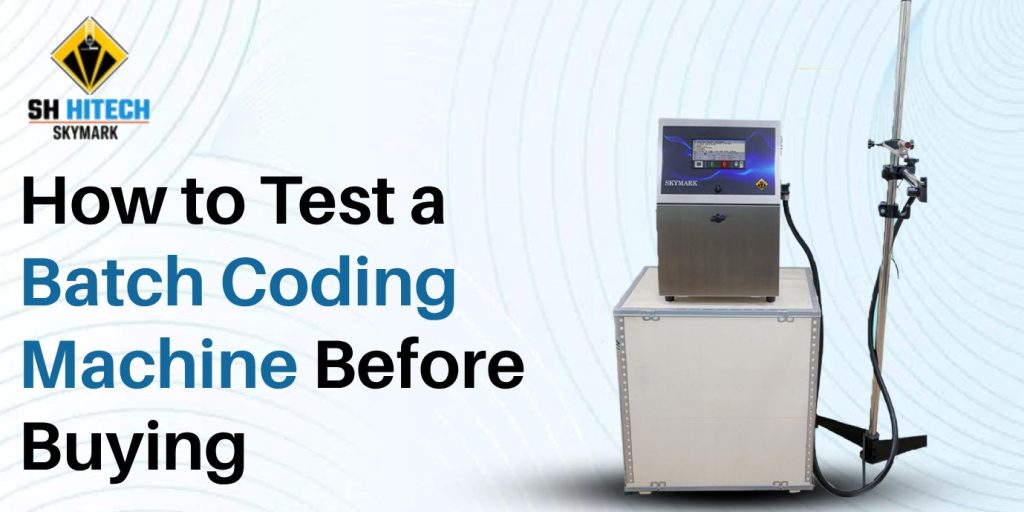
What Is a Batch Coding Machine?
A batch coding machine is an industrial printer used to mark products, cartons, pouches, bottles, and labels with variable information such as batch numbers, manufacturing and expiry dates, MRP, and barcodes. These machines are widely used across the pharmaceutical, food and beverage, cosmetics, and FMCG industries, where accurate product identification and traceability are legally required.
Depending on the technology, a coding and marking machine may use inkjet, laser, or thermal transfer methods. Each type suits different materials and production speeds, which is exactly why hands-on testing before purchase is so important.
Why Testing a Batch Coding Machine Before Buying Matters
Every production line has unique requirements: different packaging materials, line speeds, and coding formats. A coding machine that works perfectly in a showroom demo may not perform the same way on your actual product surface or under your factory’s humidity and temperature conditions.
Testing before buying helps you:
- Confirm the print quality meets legal and brand standards
- Verify the machine can keep up with your production speed
- Check compatibility with your specific packaging material
- Understand the real running cost, including ink or consumable usage
- Avoid costly downtime after installation
Skipping this step often leads to buyer’s remorse, unplanned maintenance costs, and production delays that could have been avoided with a simple trial run.
Key Factors to Check When Testing a Batch Coding Machine
1. Print Quality and Clarity
The primary job of any coding and marking machine is to produce sharp, legible, and smudge-free prints. During testing, check the print on your actual packaging material, not just a sample sheet provided by the vendor. Look closely at barcodes to ensure they scan correctly, since a blurred or broken barcode can cause rejections at the retailer or distributor level.
2. Speed and Production Line Compatibility
Ask the supplier to run the machine at your actual line speed, not a slower demo speed. A coding machine that prints well at 50 units per minute might struggle at 150 units per minute. Testing under real production conditions reveals whether the machine can genuinely handle your throughput without smudging or missed prints.
3. Material Compatibility
Different coding machines are optimized for different surfaces, such as plastic film, glass, metal, cardboard, or PET bottles. Some inks adhere well to porous materials like paper cartons but fail on glossy or oily surfaces. Always test the machine directly on the same packaging material you use daily.
4. Ease of Operation
A good coding machine should be simple for your operators to use, with an intuitive interface for changing batch numbers, dates, or barcodes. During the trial, ask an operator, not just a technician, to change the print message and run the machine. If your regular staff can operate it comfortably, it is a strong sign the machine is production-floor ready.
5. Maintenance Needs and Downtime
Ask about cleaning frequency, nozzle maintenance, and how long a typical service takes. Some coding and marking machines are almost maintenance-free, while others require frequent cleaning that can eat into your production hours. Request a demonstration of routine maintenance so you understand the real time commitment.
6. Ink, Cartridge, or Consumable Cost
The upfront price of the machine is only part of the total cost. Ink cartridges, solvent, or thermal ribbons are recurring expenses. During testing, ask the supplier for the approximate running cost per thousand prints so you can calculate the long-term investment accurately.
7. After-Sales Support and Availability of Spares
Even the most reliable coding and marking machine will eventually need a spare part or a service visit. Before buying, confirm how quickly the supplier can provide support and whether spare parts are readily available in your region. A machine backed by poor service support can cause extended production line stoppages.
Step-by-Step Guide to Testing a Batch Coding Machine Before Purchase
1. You should share your samples with the vendor. Give them the packaging material, shape and surface finish that you use when you make things.
2. Ask the vendor to do a demo at your place or a live one. Watch the machine work with your material do not just look at videos or pictures in a catalogue.
3. Check if the print is consistent on a lot of things. Run the machine to make least 100 to 200 pieces to see if it works well not just the first few things it makes.
4. Test how fast the barcode scans. Use a barcode scanner to make sure every code it prints is correct because one bad print can cause problems when you ship things.
5. Make the machine work at the speed you normally use. Ask the vendor to test it at the speed you use in your production line not at a speed.
6. See how easy it is to change from one product to another. Time how long it takes to switch from one coding format to another.
7. Look at how much the machine will cost you in total. Add the price of the machine the cost of things you need to buy to use it and the cost to maintain it to get an idea of how much you will spend.
8. Ask the vendor for people you can talk to. Talk to customers who use the machine in a business to learn about their experience, with it.
Common Mistakes to Avoid When Testing
- Testing on the wrong material: Always use your actual packaging, not a generic demo sheet.
- Ignoring line speed: A slow demo can hide performance issues that appear only under full production load.
- Overlooking consumable costs: Focusing only on the purchase price can lead to unexpected running expenses later.
- Skipping operator involvement: If only a technician tests the machine, you may miss usability issues your own staff will face daily.
- Not checking after-sales support: A great machine with poor service backup can still cause long-term headaches.
Conclusion
Choosing the right batch coding machine is easier when you test it properly against your real production conditions rather than relying on brochures or demo videos alone. SH Hitech Solution is a trusted name in industrial coding and marking machines, known for its expertise in serving the pharmaceutical, food and beverage, cosmetics, and packaging industries. With a strong focus on print quality, reliable after-sales support, and machines built for real production environments, SH Hitech Solution helps manufacturers across sectors implement dependable batch coding and traceability solutions. Their practical, industry-focused approach makes them a reliable partner for businesses looking to invest in coding technology that performs consistently on the factory floor.