
In modern manufacturing and packaging industries, accurate product identification is essential for maintaining quality, ensuring traceability, and meeting regulatory requirements. Every product that reaches the market must include critical information such as manufacturing dates, expiry dates, batch numbers, serial codes, and barcodes. Without reliable coding systems, managing production, distribution, and product safety becomes extremely challenging.
To meet these requirements, many industries rely on advanced printing technologies designed specifically for production environments. One of the most widely used solutions for product coding is the Industrial Inkjet Printer. This technology allows manufacturers to print important product information directly onto packaging or product surfaces with speed and precision. Companies such as SH Hitech Coding Private Limited provide advanced coding and marking solutions that support industries in maintaining efficient production and reliable product identification. Their expertise in industrial printing technology helps manufacturers improve productivity while ensuring accurate labelling across different applications.
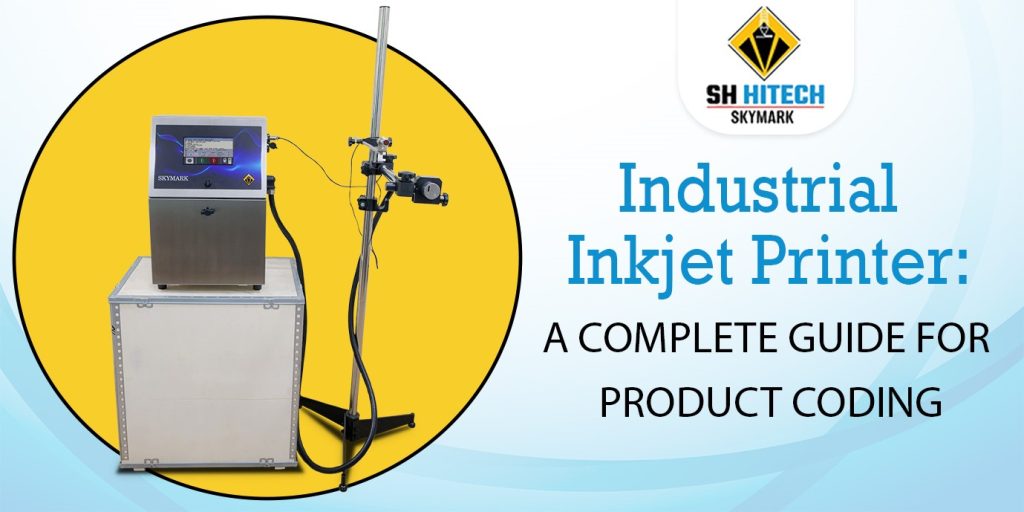
What Is an Industrial Inkjet Printer?
An Industrial Inkjet Printer is a specialized printing system designed for high-speed production environments. It uses inkjet technology to apply tiny droplets of ink onto product surfaces, creating clear and precise markings such as numbers, text, logos, barcodes, and QR codes. Unlike traditional printing machines that are used for paper printing, these printers are designed to mark a wide variety of surfaces including plastic, glass, metal, cardboard, and flexible packaging materials. This versatility makes them suitable for numerous industries where reliable product coding is required. Because of their speed and adaptability, many manufacturing companies integrate an Industrial Inkjet Printer directly into their production lines to ensure continuous coding without slowing down operations.
Why Product Coding Is Important in Manufacturing
Product coding plays a vital role in modern manufacturing systems. It helps companies maintain transparency, improve supply chain efficiency, and comply with industry regulations.
Product Traceability: Batch numbers and serial codes allow manufacturers to track products from production to distribution. If a quality issue arises, companies can identify affected batches quickly and take corrective action.
Regulatory Compliance: Many industries, especially pharmaceuticals and food processing, must follow strict labeling requirements. Proper coding ensures compliance with these regulations.
Inventory and Supply Chain Management: Clear product identification helps warehouses and logistics companies track shipments and manage inventory more efficiently.
Brand Protection: Unique codes help prevent counterfeit products and protect brand reputation in global markets. Because of these benefits, the Industrial Inkjet Printer has become an essential component in modern production facilities.
Key Components of an Industrial Inkjet Printer
Although designs vary depending on the model and application, most systems consist of several essential components that ensure smooth operation.
Print Head: The print head is responsible for directing microscopic droplets of ink onto the product surface. It plays a critical role in maintaining printing accuracy and clarity.
Ink System: Industrial printers use specialized inks designed to adhere to various materials and dry quickly. Different ink types are available depending on the application.
Control Interface: Operators use a control panel or touchscreen to enter and edit product information such as batch numbers, dates, and barcodes.
Sensors and Automation: Sensors detect the presence of products on the production line and trigger the printing process at the correct moment.
Software System: Advanced software allows operators to create custom messages, logos, or coding patterns that are automatically printed during production. These components work together to ensure that the Industrial Inkjet Printer delivers reliable and consistent results in demanding industrial environments.
How Does an Industrial Inkjet Printer Work?
The printing process in an Industrial Inkjet Printer is designed to operate efficiently in high-speed production lines. The process typically involves several automated steps.
Step 1: Data Entry: Operators enter product information such as manufacturing dates, expiry dates, or batch numbers through the printer’s control interface.
Step 2: Product Detection: Sensors detect when a product moves into the correct position on the conveyor line.
Step 3: Ink Droplet Generation: The printer generates a controlled stream of tiny ink droplets that are directed toward the product surface.
Step 4: Character Formation: The droplets form characters, numbers, or graphics on the packaging material with high precision.
Step 5: Quick Ink Drying: Industrial inks dry quickly to prevent smudging, ensuring clear and durable markings even at high production speeds. This automated process allows thousands of products to be coded every hour without interrupting production.
Advantages of Using Industrial Inkjet Printers
Manufacturers prefer modern coding technology because it offers several operational advantages.
High-Speed Printing; These printers can operate efficiently in fast-moving production lines, printing product information without slowing down manufacturing processes.
Versatile Surface Compatibility: An Industrial Inkjet Printer can print on a wide variety of surfaces including plastic, glass, metal, and cardboard, making it suitable for multiple industries.
Non-Contact Printing: Since ink droplets are sprayed onto the surface, the printer does not need to physically touch the product. This prevents damage to delicate packaging.
Clear and Accurate Printing; The technology produces sharp and legible text, even when printing small characters required for batch codes and expiry dates.
Low Maintenance and High Reliability: Modern printers are designed to operate continuously with minimal downtime, making them cost-effective for long-term industrial use.
Applications Across Different Industries
Coding technology is widely used across various sectors that require reliable product identification.
Food and Beverage Industry: The food and beverage manufacturers add manufacturing dates, expiry dates as well as batch number on the packaging to facilitate food safety and compliance.
Pharmaceutical Industry: Medicine packaging In medicine packaging, there should be accurate coding so that safety of the patient and regulation can be maintained.
Cosmetics and Personal Care Products: The Cosmetic producers include a batch code and product information to help in controlling quality and tracing.
Electronics and Consumer Goods: Electronics and electronics accessories are usually required to have a serial number and some manufacturing details.
Logistics and Packaging: The Shipping cartons and pallets have product codes and barcodes that enhance the management of the supply chain. Due to these uses, the Industrial Inkjet Printer is also important in promoting product traceability throughout the supply chains in the world.
Factors to Consider When Choosing an Industrial Inkjet Printer
Selecting the right coding equipment requires careful evaluation of several important factors.
The speed of the production line must be taken into consideration as manufacturers must make sure that the printer is capable of producing the necessary output. Another factor that is critical is compatibility with packaging materials since various surfaces need different types of ink. The ease of operation and maintenance requirements should also be checked to reduce downtime. Business needs to evaluate software features, barcode printing, and lifetime performance of the business as well. An effective Industrial Inkjet Printer can be a considerable enhancement of the efficiency of marking the products and easing the difficulties with the operational part.
Future Trends in Industrial Coding Technology
With the ongoing development of manufacturing industries into automatized and digitalized forms, the field of coding technologies is also progressing at an accelerated pace. The new printers are becoming smarter and more linked to systems of production management. Innovations in the future could be the development of better ink, a more accurate form of printing and also the integration with smart production system. These advancements will enable the manufacturers to even gain more efficiency and accuracy in product coding procedures.
Role of SH Hitech Coding Private Limited in Industrial Coding Solutions
Businesses looking for reliable coding systems often rely on experienced technology providers. SH Hitech Coding Private Limited has built a strong reputation for delivering advanced industrial printing equipment. The company offers innovative coding and marking solutions that help manufacturers improve production efficiency and maintain accurate product identification. Their expertise spans multiple industries including packaging, pharmaceuticals, food processing, and manufacturing. By providing high-quality equipment and technical support, SH Hitech Coding Private Limited helps businesses implement efficient coding systems that enhance productivity and operational reliability.
Conclusion
An Industrial Inkjet Printer provides a reliable solution for printing important product information directly onto packaging or product surfaces. Its ability to operate at high speeds, print on various materials, and deliver consistent results makes it an indispensable tool for modern production environments. With the expertise of SH Hitech Coding Private Limited, businesses can implement advanced coding solutions that support efficient manufacturing processes and reliable product identification.
👉 Send Your Inquiry for Industrial Inkjet Printer
📩 Email: contact@shhitech.in
📞 Phone: +91-9011116630 | +91-9112711560
🌐 Website: https://shhitech.in/