In modern manufacturing, traceability, compliance, and brand protection are no longer optional—they are essential. At the center of these requirements lies the Batch Coding Machine, a critical technology used to mark batch numbers, manufacturing dates, expiry dates, barcodes, and regulatory information on products across industries. As we move into 2026, batch coding machine technology is undergoing rapid innovation driven by automation, digitalization, sustainability, and Industry 4.0 integration. This article explores the latest trends, innovations, and industrial applications shaping the future of batch coding machines.
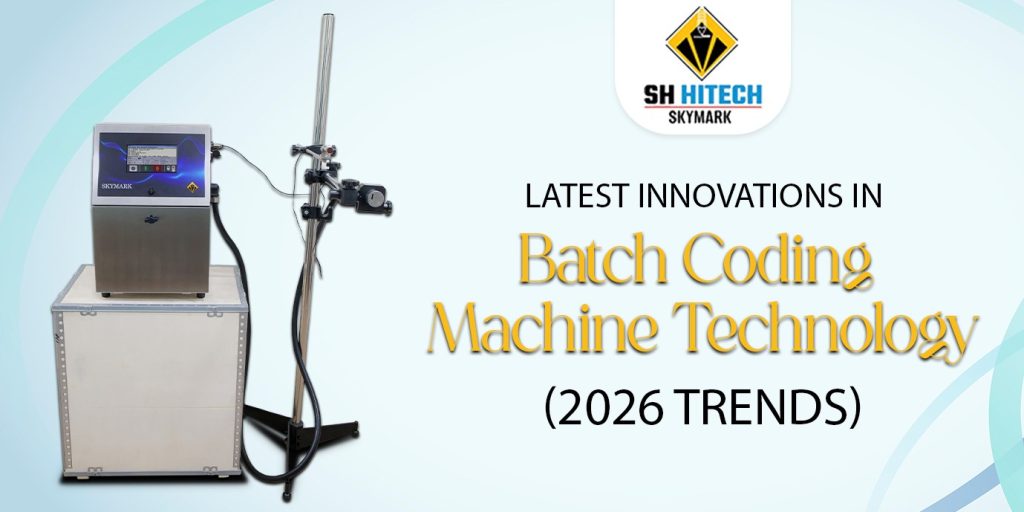
What Is a Batch Coding Machine?
A batch coding machine is an industrial marking system designed to print or engrave variable information such as:
- Batch or lot numbers
- Manufacturing and expiry dates
- QR codes and barcodes
- Serial numbers and compliance data
These machines are widely used in food & beverage, pharmaceuticals, cosmetics, chemicals, automotive, electronics, and packaging industries to ensure product traceability and regulatory compliance.
Why Batch Coding Machines Are More Critical Than Ever
Global regulations, stricter quality standards, and increasing product recalls have made accurate batch coding essential. In 2026, manufacturers face pressure to ensure:
- Error-free coding
- High-speed production compatibility
- Permanent and readable markings
- Digital traceability across supply chains
This has accelerated innovation in batch coding technology.
Key Innovations in Batch Coding Machines (2026)
1. Smart & Connected Coding Systems (Industry 4.0)
One of the most significant advancements is the integration of smart sensors and connectivity. Modern batch coding machines now support:
- IoT-enabled monitoring
- Real-time production data tracking
- Remote diagnostics and maintenance
- Integration with ERP and MES systems
These features reduce downtime and allow manufacturers to maintain full traceability across automated production lines.
2. Advanced Printing Technologies
Batch coding machines now use a variety of advanced marking methods based on application needs:
- Continuous Inkjet (CIJ) – High-speed, non-contact printing
- Thermal Inkjet (TIJ) – High-resolution coding for packaging
- Laser Coding – Permanent, ink-free, and eco-friendly marking
- Thermal Transfer Overprinting (TTO) – Flexible packaging solutions
In 2026, laser and TIJ systems are gaining popularity due to their low maintenance and clean operation.
3. AI-Based Error Detection & Code Verification
Artificial intelligence is transforming batch coding accuracy. New systems can now:
- Detect misprints or missing codes instantly
- Automatically reject defective products
- Verify code readability and compliance
- Reduce human intervention and errors
This ensures zero-defect coding, especially critical in pharmaceuticals and food packaging.
4. High-Speed & High-Precision Coding
Production lines are faster than ever. Batch coding machines in 2026 are designed to:
- Operate at ultra-high speeds
- Maintain consistent print quality
- Handle diverse packaging materials
- Adapt to rapid product changeovers
This makes them ideal for mass production environments without sacrificing accuracy.
5. Sustainable & Eco-Friendly Coding Solutions
Sustainability is a major driver of innovation. Manufacturers are shifting toward:
- Solvent-free inks
- Energy-efficient laser systems
- Reduced consumable usage
- Minimal waste generation
Eco-friendly batch coding machines help companies meet global sustainability goals while lowering operational costs.
Industry Applications of Batch Coding Machines
Food & Beverage Industry
Ensures compliance with food safety regulations by accurately printing expiry dates, batch numbers, and allergen information.
Pharmaceutical Industry
Critical for drug traceability, anti-counterfeiting, and regulatory compliance, including serialization and QR coding.
Cosmetics & Personal Care
Maintains brand credibility through clean, readable batch codes on bottles, tubes, and cartons.
Chemical & Industrial Products
Supports hazard labeling, production tracking, and compliance with safety standards.
Automotive & Electronics
Used for component traceability, warranty tracking, and quality control across global supply chains.
Benefits of Modern Batch Coding Machines
- Improved traceability and compliance
- Reduced production errors
- Lower maintenance and downtime
- Seamless automation integration
- Scalable solutions for growing production needs
These advantages make batch coding machines indispensable for future-ready manufacturing.
What to Consider When Choosing a Batch Coding Machine
When selecting a batch coding machine in 2026, manufacturers should evaluate:
- Production speed requirements
- Type of packaging material
- Required code permanence
- Industry regulations
- Integration with automation systems
Choosing the right technology ensures long-term reliability and return on investment.
Future Outlook: Batch Coding Beyond 2026
The future of batch coding machine technology will focus on:
- Fully autonomous coding systems
- Blockchain-linked traceability
- Enhanced AI-driven quality control
- Universal compatibility with smart factories
Batch coding will evolve from simple marking to a core data intelligence tool within manufacturing ecosystems.
Conclusion
The latest innovations in batch coding machine technology are transforming how manufacturers approach traceability, compliance, and production efficiency. As 2026 approaches, smart connectivity, AI-driven verification, sustainable design, and high-speed performance are redefining industry standards. For manufacturers aiming to stay competitive, investing in advanced batch coding machines is no longer just a technical upgrade—it is a strategic decision that supports quality, compliance, and future-ready manufacturing.
Get Expert Support for Your Batch Coding Needs
Email: contact@shhitech.in
Phone: +91-9011116630 | +91 9112711560
Website: https://shhitech.in/