
In today’s fast-moving manufacturing and packaging industries, product identification and traceability are extremely important. Every product moving through a production line must include clear information such as batch numbers, manufacturing dates, expiry dates, serial numbers, barcodes, and company details. These markings help manufacturers maintain quality control, comply with regulations, and improve supply chain tracking.
Traditional printing methods often require large machines integrated into production lines. However, many businesses now prefer portable coding solutions that provide flexibility and ease of use. One of the most efficient tools for this purpose is the Handheld Inkjet Printer. This compact and portable printing device allows operators to mark products and packaging quickly and accurately without needing complex machinery.
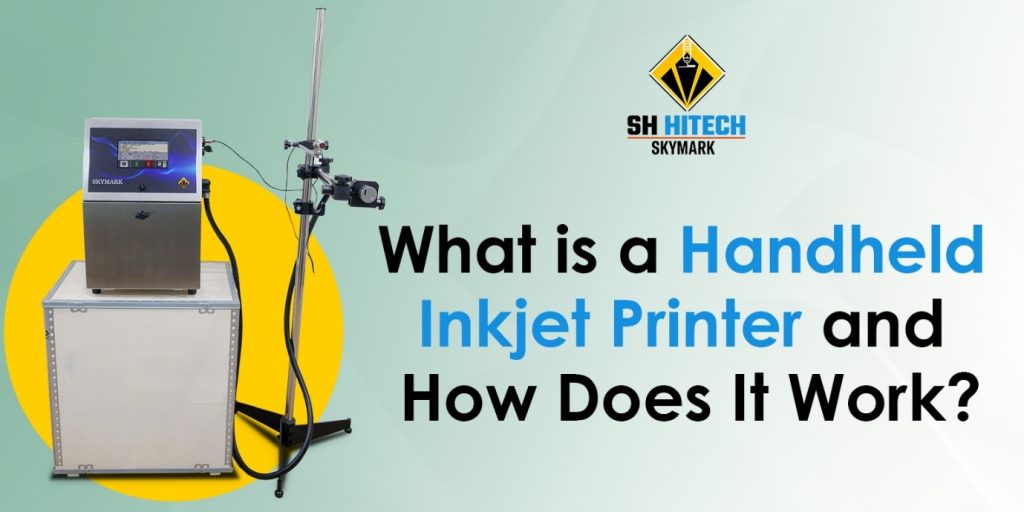
Understanding Handheld Inkjet Printing Technology
A Handheld Inkjet Printer is a portable printing device designed to print text, logos, barcodes, QR codes, and batch information directly onto different surfaces. Unlike large industrial printers that are fixed in production lines, this device can be easily carried and used anywhere in a facility.
It works using inkjet technology, which sprays tiny droplets of ink onto the surface of a product or package to create clear and precise characters. The portability of this equipment makes it suitable for businesses that require flexible marking solutions across multiple locations in a warehouse or production floor.
The ability to print on different materials—including cardboard, plastic, metal, glass, wood, and fabric—makes this device extremely versatile in industrial environments.
Why Product Coding Is Important in Modern Industries
Before understanding how the printer works, it is important to understand why coding and marking systems are necessary.
Product Traceability: Manufacturers use printed codes to track products throughout the supply chain. If a product defect or recall occurs, batch numbers help identify affected items quickly.
Regulatory Compliance: Industries such as food, pharmaceuticals, and cosmetics must follow strict labeling requirements. Clear coding ensures compliance with these regulations.
Inventory and Logistics Management: Printed batch codes and serial numbers help companies manage inventory, shipments, and warehouse operations more efficiently.
Brand Protection: Unique codes help prevent counterfeit products and ensure authenticity in global markets. These advantages explain why many manufacturers rely on a Handheld Inkjet Printer as part of their daily production and packaging processes.
Key Components of a Handheld Inkjet Printer
Although designs may vary between manufacturers, most printers contain several essential components that enable smooth operation.
Print Head: The print head is the main part responsible for spraying ink droplets onto the product surface. It controls the precision and clarity of the printed characters.
Ink Cartridge: The ink cartridge contains specialized ink formulated for industrial use. Different inks are available depending on the material being printed.
Control Interface: Most devices include a touchscreen or control panel where operators can enter information such as dates, batch numbers, or custom text.
Battery System: Since the device is portable, it typically runs on a rechargeable battery that allows several hours of continuous operation.
Internal Software: Advanced software allows users to create and edit messages, logos, or barcodes before printing. These components work together to ensure reliable and high-quality printing in industrial environments.
How Does a Handheld Inkjet Printer Work?
The working process of a Handheld Inkjet Printer is simple but highly efficient. It involves several automated steps that allow users to print information quickly on products or packaging materials.
Step 1: Entering the Print Data
Operators begin by entering the required text, batch code, manufacturing date, or barcode into the printer’s interface. Some systems also allow the upload of logos or graphics.
Step 2: Positioning the Printer
The device is positioned close to the surface where the information needs to be printed. Since it is portable, the operator can easily move it across different products or packages.
Step 3: Triggering the Print Command
When the trigger button is pressed or the device detects movement, the print head begins spraying microscopic droplets of ink.
Step 4: Ink Droplet Formation
The inkjet technology controls each droplet precisely, forming characters or images on the surface.
Step 5: Instant Drying
Special industrial inks dry quickly after printing, preventing smudging and ensuring long-lasting marks.
This process takes only a few seconds, allowing operators to code multiple products efficiently without slowing down production.
Applications Across Different Industries
Portable coding devices are widely used across many industrial sectors because of their flexibility and ease of operation.
Food and Beverage Industry: Manufacturers print manufacturing dates, expiry dates, and batch numbers on packaging materials to meet safety and regulatory requirements.
Pharmaceutical Industry: Medicine should be properly coded in terms of batch and expiry dates to ensure that it is safe and traceable.
Cosmetics Industry: Cosmetic products usually need batch identification codes to ensure the quality of products and also to track them.
Electronics and Electrical Equipment: Product surfaces or packaging are printed with serial numbers and manufacturing information.
Logistics and Warehousing: Shipping cartons and pallets are marked with product codes, barcodes, or destination information. Because of its flexibility, the Handheld Inkjet Printer has become a valuable tool for businesses that require fast and portable printing solutions.
Advantages of Using Handheld Inkjet Printers
Many industries prefer portable coding devices because they provide several operational benefits.
Portability and Flexibility: The lightweight design allows operators to move the printer easily between different workstations or production areas.
Easy Operation: Modern printers feature user-friendly interfaces that require minimal training for operators.
Cost Efficiency: Compared to large industrial printing systems, portable devices often have lower installation and maintenance costs.
High Print Quality: Inkjet technology produces sharp and clear text, logos, and barcodes on a wide range of surfaces.
Reduced Production Downtime: Since the device does not require complex setup, it can be used immediately whenever coding is needed. These benefits make a Handheld Inkjet Printer a practical solution for businesses looking to improve efficiency and flexibility in product marking.
Role of SH Hitech Coding Private Limited in Industrial Coding Solutions
The company offers advanced coding equipment designed to meet the needs of modern manufacturing industries. Their expertise includes helping businesses select suitable coding technologies for different applications such as packaging, product identification, and logistics management.
By focusing on quality, innovation, and customer support, SH Hitech Coding Private Limited helps manufacturers implement efficient coding systems that improve productivity and maintain consistent product identification standards.
Factors to Consider When Choosing a Handheld Inkjet Printer
Selecting the right coding equipment requires careful consideration of several factors.
Environment in which the printer is going to operate like temperature, dust or humidity should also be taken into consideration. The ink also should be compatible with other materials, particularly with plastic, metal or porous surfaces.
The battery life and the printing speed ought to be in correspondence to the production facility operation needs. Also, the business should consider the features of software, barcodes, and maintenance needs prior to a final decision.
The Handheld Inkjet Printer is one of the products that can be greatly enhanced in terms of efficiency and reliability with the help of the right choice.
The Future of Portable Industrial Printing
Industrial printing technologies do not stop their development with the increase of automation and smart manufacturing. The contemporary coding systems are also beginning to connect with the digital production management system, and as such, they are now able to track items in real time and update the data automatically.
The future trends will be more sophisticated software integration, the effectiveness of the battery, and greener ink solutions. These new technologies will continue improving the efficiency and sustainability of industrial coding operations.
Due to the ever-growing industries spread all over the world, there will always be a need to identify and trace products with the help of reliable and portable printing technologies.
Conclusion
A Handheld Inkjet Printer enables the manufacturer to print valuable details on products or packaging materials like batch number, manufacturing date, barcodes and logos. It is a very impressive printer with many industries making it a perfect choice due to its portability, simplicity to use and quality printing.
With the help of the skilled providers such as SH HITECH CODING PRIVATE LIMITED, the businesses can deploy the new coding solutions to enhance production efficiency and regulatory compliance, coupled with the product traceability.
Request Product Details & Pricing Now
📩 Email: contact@shhitech.in
📞 Phone: +91-9011116630 | +91 9112711560
🌐 Website: https://shhitech.in/